
“Sizebay: virtual fitting room grows more than 40% in Europe with technology made in Brazil”
Original headline: “Sizebay: provador virtual cresce mais de 40% na Europa com tecnologia made in Brazil”


The piece reports a year of growth: forty-one percent more revenue in Europe and thirty-five percent in Brazil, sixty-five countries and one thousand two hundred virtual stores. The new artificial intelligence personalization platform is put at roughly a fifth of the quarter's new recurring revenue, with a fashion intelligence platform still in development.
What the piece reports
Janderson is quoted as co-founder. Every figure here is the company's own claim as the outlet reported it, which is how we cite it: monthly recurring revenue up 41% in Europe and 35% in Brazil over the year, and the product in 1,200 virtual stores across 65 countries and 32 languages.
What he uses his answers for is the mechanics of an integration rather than the growth. He credits the year to what joining a company three decades older gave a ten-year-old one, and he is specific about what that was.
That gave us technical muscle, a systemic view of the entire process long before the product reaches the shelf, and a solid base to accelerate projects that were already on our horizon, especially the ones tied to artificial intelligence, visual search and personalisation.
The product line the piece lays out is that acceleration made concrete: recommendation by similarity, search by image with visual recognition, complete looks built from a shopper's style, measurements and preferences, and a data platform in preparation to collect and structure behaviour in real time. The generative AI recommendation and personalisation platform had already reached clients in Brazil and Europe, and the company expected it to account for around 20% of new quarterly recurring revenue. The stated goal for 2026 is to lead in at least ten international markets besides Brazil.
The paragraph worth the whole piece is the one about architecture. The outlet describes the next step for the sector as orchestrating multiple specialised AI agents working in coordination in real time, and then reports that this is already running inside the product: a size recommendation agent, a visual product recommendation agent and the visual generation and avatar modules, working together to assemble a complete look for one person. He adds what the collected data is for.
The data collected will power AI agents, allowing experiences that are increasingly intelligent, contextual and frictionless, reducing the need for manual or invasive interactions.
An agent team working inside a real commercial product, described in the trade press in 2025 rather than promised on a slide. Holybiz is the same idea pointed at much smaller companies.
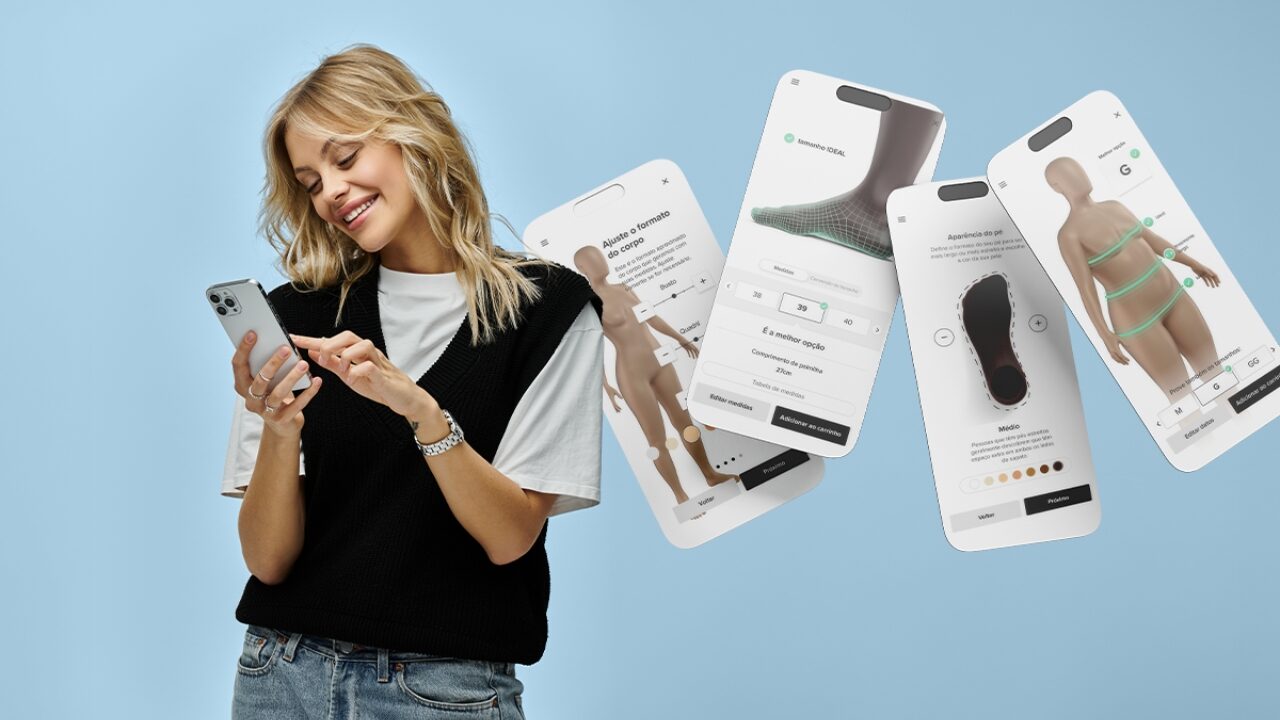

“Sizebay launches AI solutions for fashion stores at Fórum ECBR 2025”
The AI-era product work becomes public: Fashion Hub, which pairs generative AI with consumer behavior data for hyperpersonalization, and Size & Fit, both presented at Fórum E-Commerce Brasil 2025. This is the product chapter Janderson led during the earnout, told by the trade press.


“Fashiontech Audaces buys Sizebay, leader in virtual fitting rooms”
The Valor Economico title that broke the acquisition, bylined Maria Luiza Filgueiras. Two multinationals out of Santa Catarina combine: Audaces, in 42 countries, buys Sizebay, which leads virtual fitting rooms in retail and operates in 58. The price was not disclosed, and Sizebay keeps an independent operation.


“Sizebay is acquired by Audaces as part of global expansion strategy”
The primary source for the acquisition: the Italian-Brazilian fashiontech Audaces acquires Sizebay. Combined, the companies report more than 400 employees across six units in Europe and the Americas, serving customers in over 100 countries. Sizebay keeps independent operations under its co-founders.