
Lovi, from the first conversation to beta users in one week

- 8hof consulting, remote
- 48hto the first working mockup
- 1 weekto a version in beta users' hands
- Dailyiteration cycles with the consultant

- MVP strategy and definition
- Development process improvement
In this case
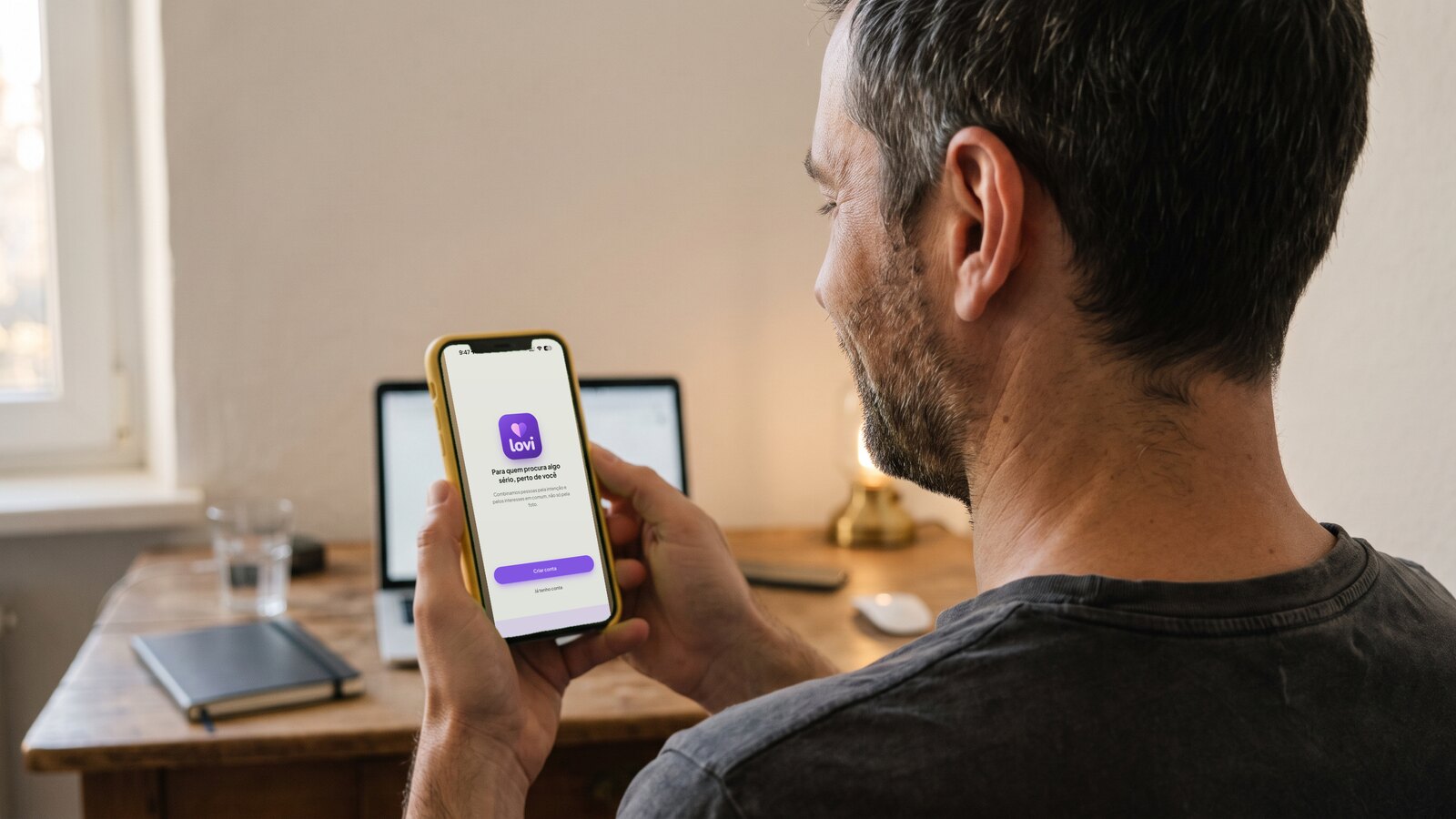
Luciano Loffi, CEO of Operand, had projects to build and months of courses behind him that never gave him the practical path to building a product with AI agents. He took an eight-hour consulting package from Holybiz, remote. In those hours Janderson walked him through the whole agentic product-building process, then reviewed the work in daily cycles. Forty-eight hours after the first conversation, Lovi, a geolocated dating app for his region, had its first working mockup. One week after it, beta users were going through onboarding and the first feedback was in.
The context
Luciano and Janderson had worked together years before, in 2015 and 2016, while Operand was being remodeled and recreated. Janderson was his consultant then, on product construction, user experience and product validation. That is the relationship he came back to.
This time the question was different. He had projects to build, and he wanted to build them the agentic way: AI agents doing most of the making, inside a structured process, instead of an improvised one. He had spent months on courses and specializations to get there. None of them gave him a clear answer, the practical path from an idea to something a user could open. He came to Holybiz because he knew that path is what we practice.
The entrepreneur
Luciano Loffi lives and works in Joinville, Brazil. He has been the CEO of Operand since 2009: a management system for marketing agencies, built to make an agency's operation perform, serving over 1,300 clients across Brazil by his profile's own count. In 2024 he founded Hype Social. Before Operand he was a director at Falcan Marketing Estratégico, from 2006 to 2012. That is over twenty years in marketing and technology, and the skills he lists first are business intelligence, user experience and project management.
That is the context that matters for this page. He did not need to be told what a product is, or how to run one. He needed the route to building the next one a different way.
The challenge
The project was Lovi: a geolocated dating app for his region, with a differentiation of its own. What sets it apart is Luciano's to tell, and it is not on this page.
The hard part was never the idea. It was the route. Which tools, in what order. What process turns an intention into a screen someone can use, and keeps the experience and the interface at a standard when agents write most of it. How to get the thing into people's hands fast enough to learn from them instead of from another course. Luciano had the product judgment and a running business behind him. He was missing the practice.
What Holybiz brought
An eight-hour consulting package, remote from start to finish. Inside those hours Janderson sat with Luciano and walked through the whole process of building a product with agents: the tools, the methodologies, the process from idea to a testable build, and the UX and UI practice that goes with it. After that, point meetings, as the prototype evolved and needed a decision.
Two of the practices on our services page did the work here, and they are worth naming the way that page names them. MVP strategy and definition: what the first version must prove, what it can leave out, and how to validate it with real users before the budget is gone. Development process improvement: the delivery rhythm, and how AI agents fit the workflow without breaking quality. On Lovi those two were not separate deliverables. They were the same week.
What Holybiz did not do: build the app. The hands on Lovi were Luciano's. What came from our side was the route, the review of every cycle, and the product questions a route alone does not ask.
The consultant builds this way himself. During the earnout that closed his exit from Sizebay, the company he co-founded and took to three continents, the AI wave arrived and he remodeled that company's team, product and direction around it. Since then he has been building companies operated by agent teams, Komploop and Holybiz itself among them.
How the work went
The first conversation set the process. Forty-eight hours later, Lovi had its first working mockup.
From there the rhythm was daily. Luciano shared what had changed. Janderson validated the interface and the experience, helped define the process as it took shape, and suggested what to fix in usability, which tools to publish with, and what a first user would feel. Each cycle closed with a decision and a change.
By the end of the week there was a version beta users could test. They received it, went through it, and the first feedback came back. The first adjustment cycles started on that feedback. All of it remote.
None of those cycles was only about the build. Prototyping went alongside the business: how Lovi would make money, which features would set it apart, what the first user had to see.
While we are prototyping, we are already discussing the business: how it makes money, what sets it apart, what the first user has to see. It is never only the technical side.
The result
In one week, Lovi was usable and functional enough for its first users to go through onboarding and navigate the app. It was not launched and it was not proven in a market. It was testable, which is what a first week is for.
Janderson's estimate of the conventional path for a project like this, from ideation to validation with real users, is around three months. What was measured is the calendar: one conversation, a mockup at 48 hours, beta users at one week.
What Luciano took away was not the speed. It was the practical path, the one months of courses had not given him, delivered in hours. And it was the method that stays: the process, the concepts and the learnings he keeps for the projects he came in with.
Two things set this engagement apart, and they are what we would bring to the next one. Fast prototyping and validation: a build in front of real people within days, so the learning comes from them. And an entrepreneur who builds products advising an entrepreneur who builds products, so that while the screens are still cheap to change, the conversation is already about business, monetization and the features that make the product different, not only the technical side.
Evidence
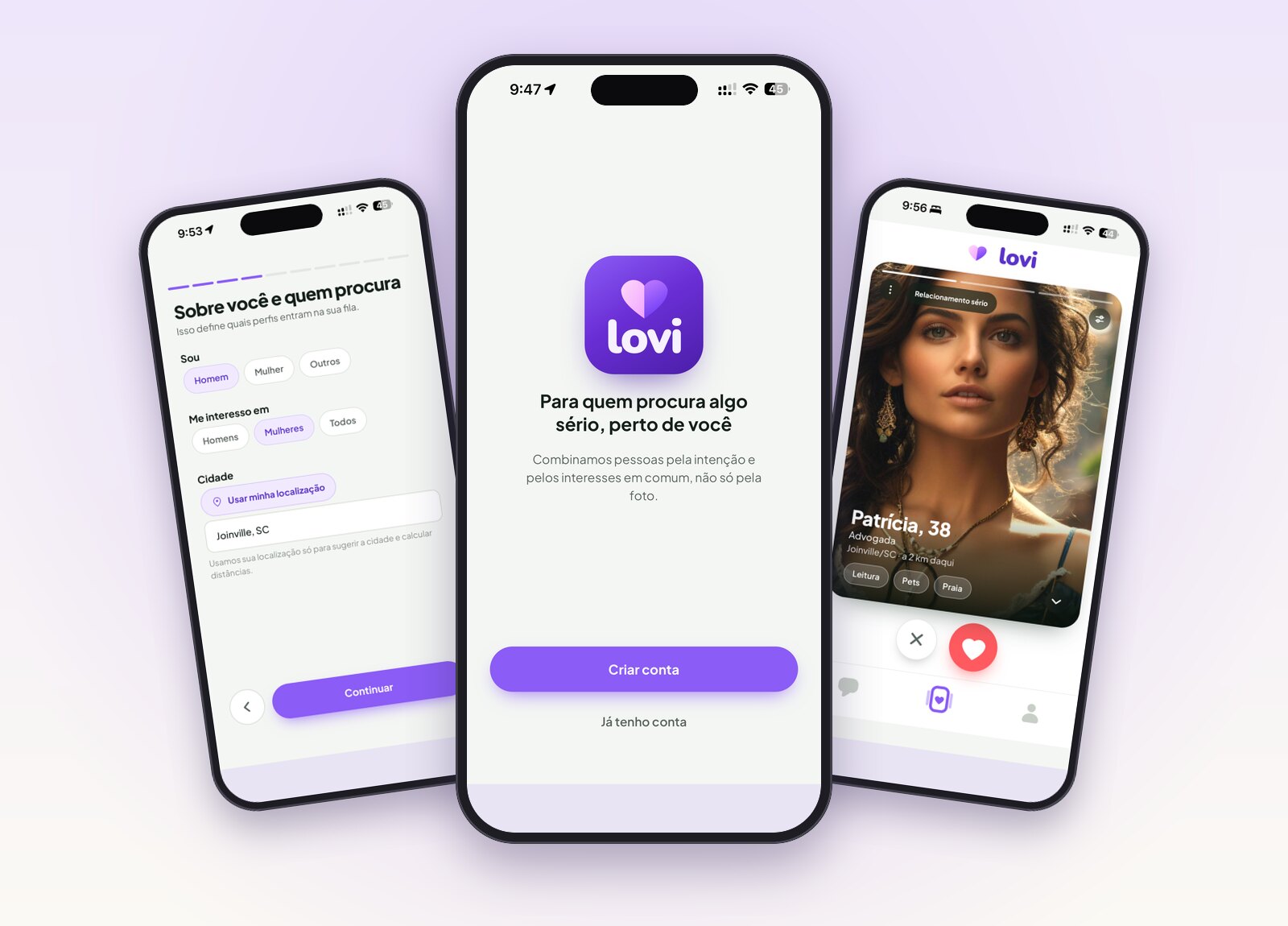
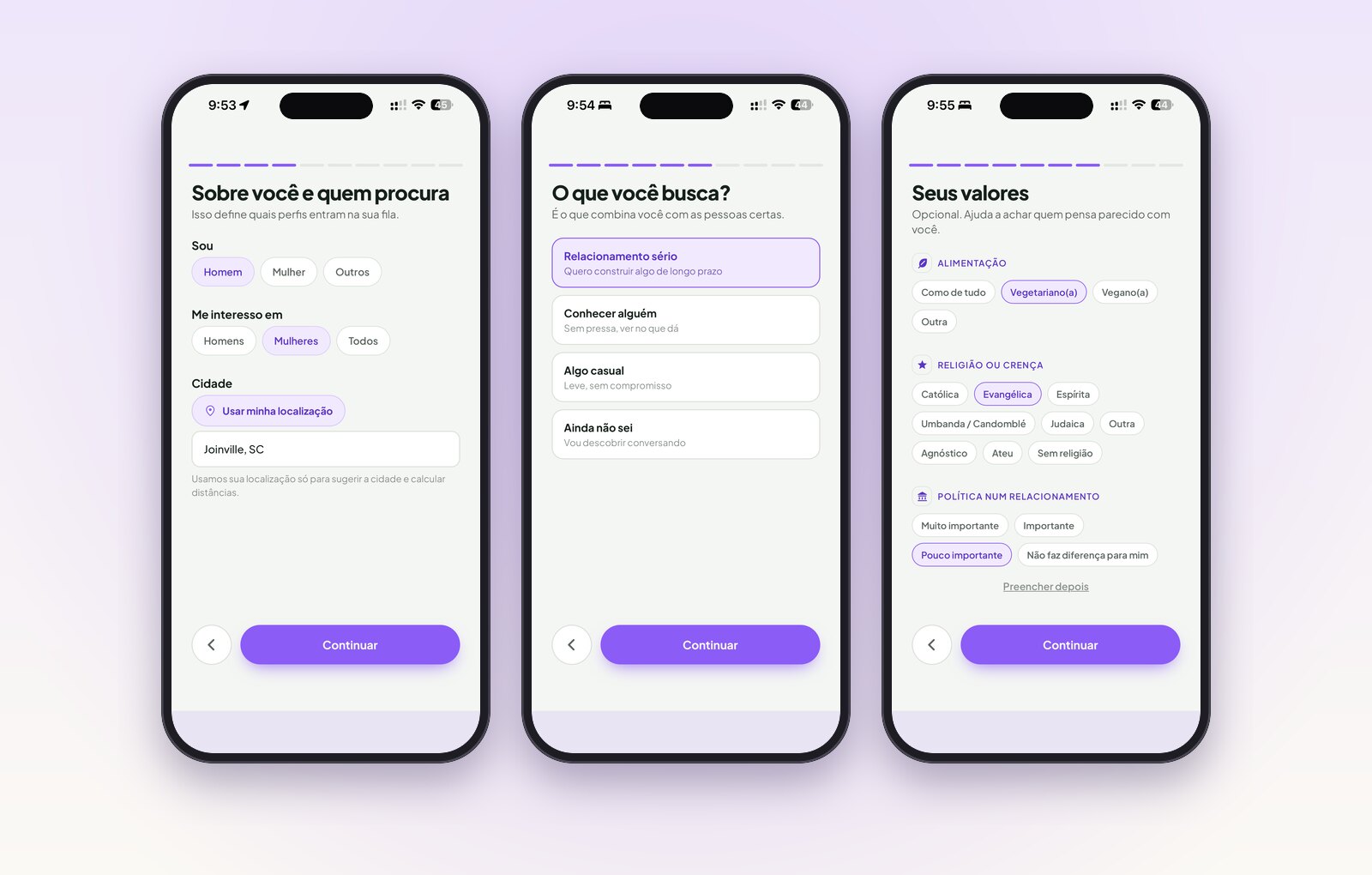
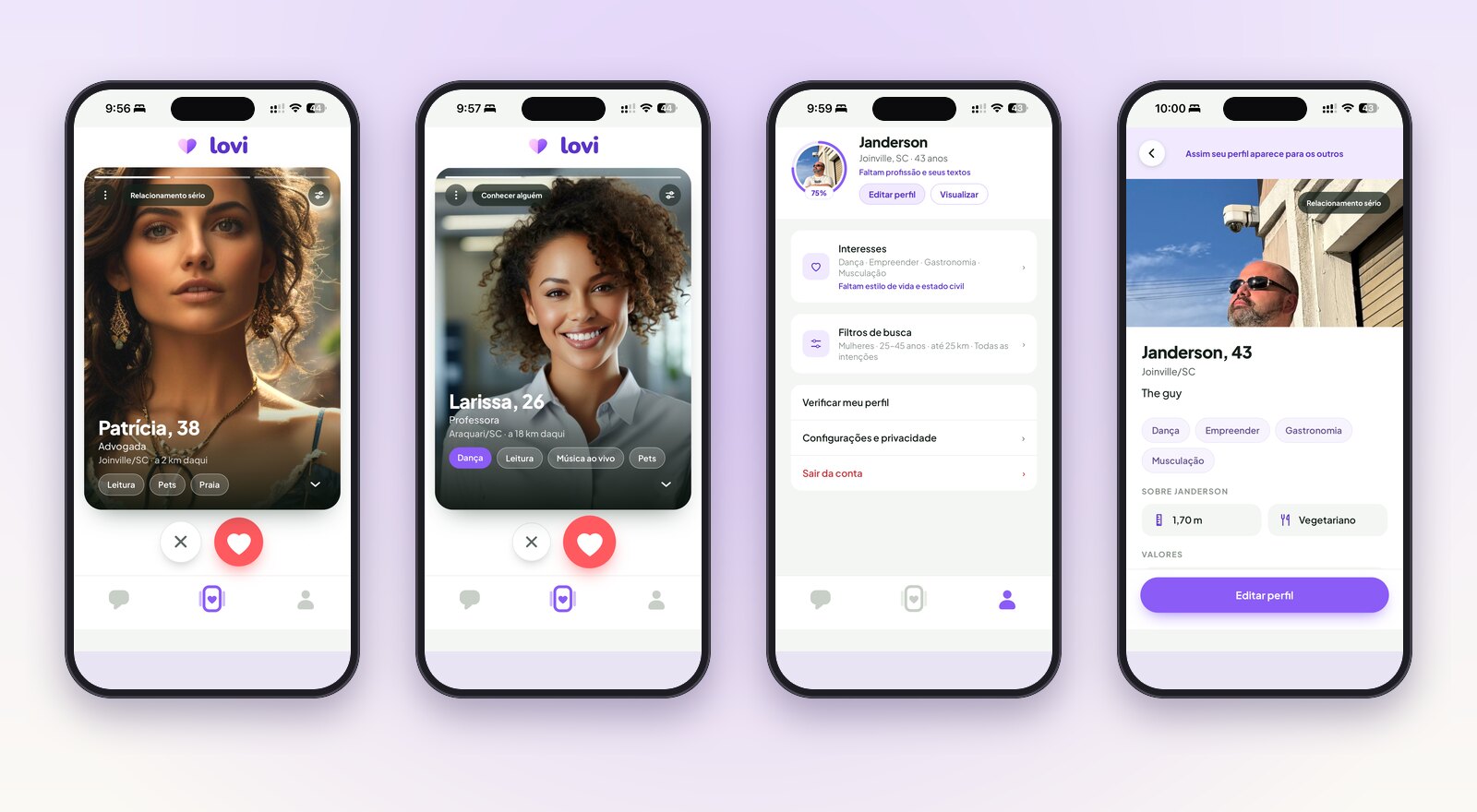
The evidence for this case is the build itself: the screens the beta users received one week after the first conversation, taken from the app and not mocked up for this page. The screens below are those, set in a phone frame and nothing else.
In Luciano's words
After a lot of time and money spent on courses and workshops, I advanced in hours what had been taking me months to understand. The methodology, the format and the product knowledge came from an entrepreneur who builds products to an entrepreneur who builds products. That makes all the difference: someone who understands product and market, and who, while we were prototyping, was already discussing business ideas, monetization and the features that set the product apart. It was never only the technical side.
Luciano LoffiCEO of Operand, founder of Hype SocialA first working mockup 48 hours after the first conversation, because that conversation set the process before the build started.
Daily cycles, each one reviewed for interface and experience, put feedback in front of the builder while a change was still cheap.
Months of courses did not produce the practical path. Eight hours of walking it, with someone who walks it for a living, did.
Prototype and business in the same conversation: monetization and differentiation get decided while the screens are still easy to move.
What stays after the engagement is the method. The next project starts from it, not from another course.